Somewhere in Querétaro or Monterrey, a plant manager just received a vPPA template from headquarters with a note that says “roll this out at the Mexico site.” And nobody in the room wants to be the first to say that it doesn’t work the way it does in Texas.
It’s a fair question, and the honest answer has more layers than either a flat yes or a flat no. The legal vehicle exists in Mexico. The structure has been signed here. What’s missing is the specific thing that makes a vPPA attractive in the first place.
What a vPPA actually does
A virtual power purchase agreement is a financial contract. Nothing more.
You and a generator agree on a strike price — say 45 dollars per megawatt-hour. The generator builds its plant, sells everything it produces into the wholesale market, and gets paid whatever the market pays that hour. Then the two of you settle the difference in cash. Market price above the strike, the generator pays you. Market price below, you pay the generator.
Your factory never receives that electricity. Your meter doesn’t know the contract exists. You keep buying power exactly as you did before, from exactly the same supplier, on exactly the same invoice.
What you get is a hedge and a certificate. The hedge smooths your exposure to wholesale prices. The certificate a REC in the US, a guarantee of origin in Europe is what your sustainability team reports against Scope 2.
Hold on to that detail. It’s where the Mexican version breaks.
Mexico has the legal vehicle
This is where most explanations get lazy and just say “vPPAs don’t exist in Mexico.” That’s not accurate.
Under the Ley de la Industria Eléctrica, Mexico recognized the contrato de cobertura eléctrica — a bilateral contract in which two parties commit to buy and sell energy or associated products at a set price and term, and which can be settled financially rather than physically. That’s a contract for differences by another name.
Mexico also recognized the comercializador no suministrador: a market participant that trades energy in the wholesale market without serving end-user load. A large industrial group can, in principle, stand up that entity, register with CENACE, and take positions.
So the pieces are on the table. A financially settled contract, and a way to participate in the market without being anyone’s utility.

The part that doesn’t survive the trip
Here’s the problem, and it’s not legal. It’s arithmetic.
Your plant in Mexico pays a CFE tariff. If you’re a mid-size industrial load, that’s probably GDMTH — capacity charges, distribution charges, and energy priced across base, intermediate and peak periods. That tariff moves according to a published formula and regulatory decisions.
A financial hedge settles against the PML: the nodal price CENACE publishes for the point where your generator injects.
Those two numbers do not track each other. Not loosely, not seasonally, not in any way you could defend in a risk committee. Your cost is bolted to one mechanism and your hedge floats on another.
So what have you built? Not a hedge. A directional bet on nodal prices, sitting next to an unhedged electricity cost that keeps doing whatever it was already doing.
The migration you were trying to avoid
For the hedge to hedge anything, your load has to pay PML. That means becoming a Usuario Calificado, or buying through a Suministrador Calificado — registering your load, changing your supply relationship, and taking on wholesale market exposure.
Which is exactly the step the vPPA structure was designed to skip.
That’s the whole thing in one sentence: in Mexico, the migration is what creates the exposure the vPPA is supposed to cover. You can’t have the second without the first. In ERCOT you can. That’s why the template travels badly.
What your auditor will say
Without physical delivery, there’s no own-use exemption. The contract is a derivative under IFRS 9. Mark to market every quarter, straight through profit and loss.
Which means a structure sold internally as “price stability” arrives in the financial statements as quarterly volatility in reported earnings. With no offsetting movement on the cost side, because your CFE tariff didn’t move. That’s a difficult meeting.
What companies actually sign here
The Mexican corporate renewable market went physical. Not because financial structures are forbidden, but because once you’ve done the migration anyway, physical delivery gives you the same economics with less machinery.
Three structures cover most of what gets signed:
Sleeved supply through a Suministrador Calificado. You register as a Usuario Calificado or contract through a qualified supplier. They buy in the wholesale market and sell to you at a fixed price. You never meet the generator, and you don’t need to. Power is physically delivered, wheeling charges apply, and CELs come with it. This is the closest honest equivalent to a vPPA, and the English term for it is a sleeved PPA not a virtual one.
Onsite PPA. Solar on your roof, your ground, or over your parking lot. A developer builds and operates it, you pay per kilowatt-hour generated. No wheeling, no market registration, no grid exposure. The power never leaves your property.
Offsite PPA under isolated generation. A dedicated plant delivering to your facility across the grid. This is the route when your roof is too small or your load is too large. Wheeling charges apply and belong in the price from day one.
Questions to ask before you answer headquarters
If the vPPA template is on your desk right now, these five will tell you where you stand.
- Are our Mexican sites on basic supply or qualified supply today?
- What tariff are we actually paying, period by period?
- Is the parent company after cost certainty, RE100 progress, or both — and which one is the real deadline?
- What does the auditor say about derivative treatment on a Mexican entity?
- Have we costed the physical alternatives, or did we go straight to replicating the corporate template?
Companies that Trust us:
Brands that trust Solarfy









If you want a second opinion on the numbers
We work on industrial solar in Mexico — rooftop, ground mount, carport, and offsite generation. We don’t sell financial instruments, and we’re not going to tell you a vPPA is impossible when the honest answer is more complicated than that.
But if you have a corporate template and you’re trying to figure out what it maps to at a Mexican plant, send it over. We’ll tell you what the physical structures would cost against your actual tariff, and where they land next to what your parent company signed. If the answer is that you’re better off with the financial route, we’ll say that too.
GET IN TOUCH
Let`s Talk

Power Purchase Agreements (PPAs) in Mexico: Smart Energy with Zero Upfront Costs
Power Purchase Agreements (PPAs) in Mexico let businesses access solar/photovoltaic energy without upfront costs, offering predictable rates and environmental benefits. PPAs enable companies to support sustainability while reducing expenses and energy risks. What is a PPA in Mexico? A Power Purchase Agreement (PPA) is the most cost-effective way for Mexican businesses to adopt solar energy.…
Continue Reading Power Purchase Agreements (PPAs) in Mexico: Smart Energy with Zero Upfront Costs

Offsite Solar PPA in Mexico
Some industrial sites can’t host the system they need. The roof is at capacity, the land is committed to operations, or the load is simply larger than the available surface (roof/ground/parking lot) can generate. An offsite PPA solves that: the solar plant is built somewhere else, and your facility buys the output under a long-term…
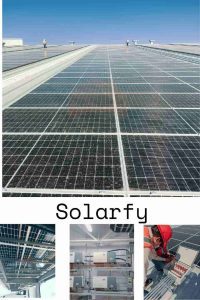
Onsite Power Purchase Agreements: under Mexican sun
Onsite power purchase agreements (PPAs) are contracts that allow businesses to buy electricity from renewable energy sources located on your facility. They offer several benefits, such as reducing greenhouse gas emissions, lowering energy costs, and improving energy security. Onsite Power Generation Understanding Onsite Power Purchase Agreements (PPAs) If you are looking for a way to…
Continue Reading Onsite Power Purchase Agreements: under Mexican sun